Taking a Big Picture Look at Denomination

As a newspaper correspondent, I cover religion, but bear in mind, in a rural area in upstate New York.

Ironically, I’ve noticed very low attendance in, if not complete absence of, Sunday Schools in the denominational churches. Kids however come to the Community or non-denominational churches and participate in the Sunday Schools.

This observation seems to coincide with a 2010 LifeWay survey where nearly two-thirds of pastors (62%) believed the importance of identifying with a denomination will decline over the next decade.

My take?

The psychological landscape is shifting from exclusiveness to inclusiveness, creating a culture where the denominating force is serving the faith, as opposed to trying to control the faith.

The word denomination has 2 definitions:

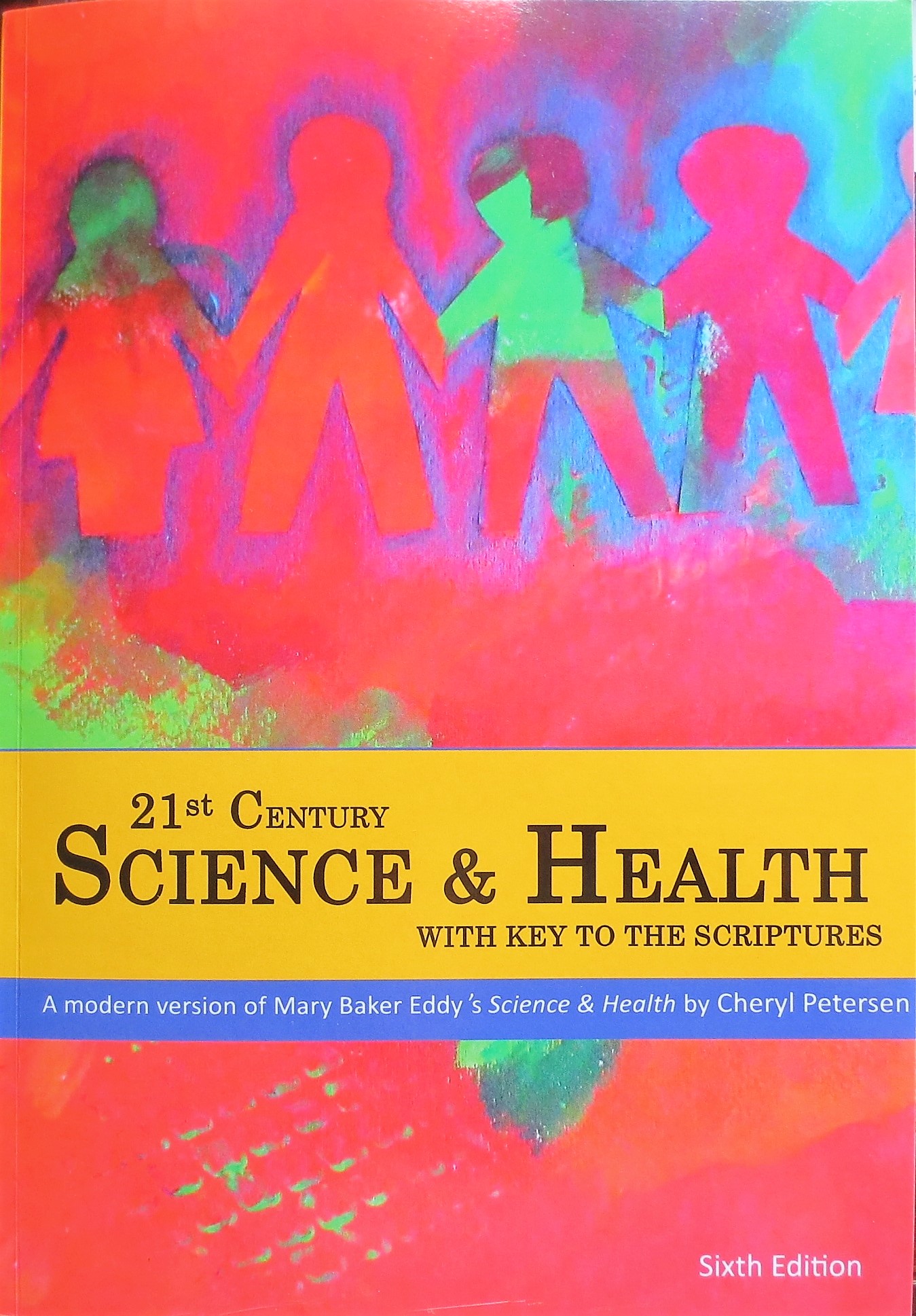
  1. The act of naming or designating a person or thing. This is a verb. God and God’s healing power was denominated divine Science (or Christian Science) for the sheer reason of being able to talk about it. The book 21st Century Science and Health discusses this faithful power and our ability to understand and apply it in everyday life.
  2. A body of persons adhering to a particular religious faith; a religious denomination. This is a classification, leading down the road of exclusiveness.

I revised the denominational textbook Science and Health and re-established the fact that the book is accessible to people from all different cultures. Readers of 21st Century Science and Health become savvy to the fact that Science and Health was written years before a religious organization was established.

On the job as a reporter, or a revisionist, I find faith is strong and healthy, but in a loving, inclusive God with the ability and willingness to heal and guide.


Read Between the Lines

When reading any book with the intent to increase spiritual power, I remind myself not to get hung up on the vocabulary or language. Human words can’t describe God any more than a wrench can describe a car. We use words to help us understand spiritual power just as we use a wrench to help us fix a car.

Reading 21st Century Science and Health, “God is Spirit; therefore the language of Spirit must be, and is, spiritual. Divine science attaches no physical characters and significance to the Supreme Being and manifestation.”

Not getting caught up in the material language we discover spiritual language can be heard. Spiritual power can be experience.


Live Life Despite CRUD

Human Beings are constantly being diagnosed with symptoms that I satirically refer to as collectively belonging to Chronic Repetitious Urging Disease (CRUD). I myself have been afflicted with these symptoms that stop me from living life to its fullest. The key to reducing our risk to CRUD is distinguishing between human mind and divine Mind.

No one is immune to CRUD because life itself is intertwined with urge. An urge is an impulse, a desire, or a drive. And to know what is urging us, either the human mind or the divine Mind, is essential to relief from CRUD.

The human mind is repetitiously urging humanity to be afraid, be mortal, or be power-hungry. And, life becomes a chronic case of battling with frail, egotistic, smart, control freaks, not to mention urgently dealing with the ever-morphing physical stuff in the world. Consequently, we feel dis-eased, cruddy.

Society however is realizing the power of the human mind and successfully training these minds to respond to better influences or urges. Knowing the limitations of the human mind, many people have joined a spiritual quest in order to manage the human mind more effectively. Ironically, these spiritual seekers can still be plagued by CRUD unless divine Mind is firmly and repetitiously tapped into.

CRUD attacks indiscriminately. We automatically turn on the TV or iPOD to drown out the cyclic thoughts in our minds. We meditate as soon as we are nervous. We are urged to talk on our cell-phones about nothing. We go shopping for things we really don’t need. We somberly echo useless words that no longer have an impact. We stop talking to our contemporaries and become aloof. We become so ritualistic about taking pills or praying that we would go into terrible withdrawals if the routine was altered.

Basically, the human mind can’t resolve CRUD. All the effort made to try to get rid of our human urges only replaces one urge with another because urge is real, undying. Therefore, the key is to discover the urging of divine Mind. Life than becomes an ongoing adventure of adapting to change and being useful today. We feel at-ease.

With the same amount of urgency, if not greater, divine Mind is influencing us to live life to its fullest, despite CRUD. Divine Mind’s urging coincides with healing. We are being compelled to be honest, generous, noble and open to new ideas. We don’t cling to that which has been outgrown and we don’t whine over the demand to progress. Instead of viewing ourselves as a battling human mind pitted against itself or another human mind, we see ourselves as a person who has some human conditions that must be dealt with daily in order to enjoy life in its broadest sense while being urged by divine Mind.

From 21st Century Science and Health, “Jesus never spoke of disease as dangerous or as difficult to heal. When his students brought to him a case they had failed to heal, he said to them, “O [faithless ones] unbelieving and without trust in God, a perverse (wayward, crooked and warped) generation!”[1] His answer implies that the requisite power to heal was in Mind. Jesus didn’t prescribe drugs or urge obedience to fleshly demands but acted in direct disobedience to them.”


[1] Matt. 17:17; Mark 9:19; Luke 9:41 (Amplified)


Church Hopper Visits Quaker Meetings

Church hopping is my thing nowadays. Granted, religious organizations have their pitfalls but, I am not unsatisfied with church. I like visiting the many different societies. I can look past the bureaucracy and feel comfortable at the services.

Church hopping is similar to walking in New York City’s Times Square and experiencing everything from entrepreneurship, pierced bodies, funky clothes, talkers, the speechless, the serious, and the unhurried.

I find God really does have a sense of creativity, humor, and wisdom.

When I attend the Timberlake Church in Redmond, Washington, I definitely wear earplugs so as to enjoy the quality, yet loud music. When I attend the Albany Friends Meeting, however, I pull out my mental ear stops to enjoy the silent thoughts or prayer. The point of church is to appreciate group solidarity, not convert someone.

Courtesy S. Abbott

The Albany Friends or Religious Society of Quakers follow the tradition of gathering in silence, without the services of a designated pastor or minister. Although Quakers believe that political and other pro-action is important to improve this world, their meetings can sometimes include one hour of consecrated silence.

A few of the Quakers core beliefs are that God is love and that the light of God is in every single person and we can experience redemption and the Kingdom of Heaven now, in this world.


Getting to Know Dandelion

Upstate New York is flourishing with dandelions. A magnanimous carpet of soft yellow flowers is cheering spring weather forward—to the dismay of some lawn caretakers. Dandelions, in all their brightness, are seen by some people as pesky weeds, a blot in their picture perfect lawns.

It’s all a matter of interpretation.

Although no one begrudges a dandelion-less lawn, the pretty yellow flowers do not need to discombobulate our thought process. Everything our physical senses sees, hears, and feels is temporal. We can let it go and engage our spiritual senses which can detect and lead into the experience of that which is ongoing such as composure and calm, even getting to know the dandelion.

Dandelion is a hardy perennial. There are hundreds of species of dandelion. Some can grow to nearly 12 inches in height. Dandelions have deeply notched, toothy, spatula-like leaves that are hairless and rather shiny. The spatula-like leaves funnel rain to the root. The dark brown roots have one main tap root. The fleshy root is filled with a white milky substance that is bitter and slightly smelly. Dandelion flowers open with the sun in the morning and close in the evening.

Dandelion has been used in traditional Native American and Arabic medical systems. The leaves and roots are used fresh or dried in teas, capsules, or extracts. Dandelion use is generally considered safe however use should be discussed with your health care provider. Dandelion is a rich source of vitamins A, B complex, C, and D, as well as minerals such as potassium, iron, and zinc. Dandelion leaves add flavor to salads, sandwiches, and teas. The roots are used in some coffee substitute, and the flowers are used to make wines.

From 21st Century Science and Health, “Nature voices spiritual law and divine Love, but the human mortal mindset misinterprets nature. Arctic regions, sunny tropics, coral reefs, the Mid-Atlantic Ridge, flowering deserts, and galaxies—all point to Mind, the spiritual intelligence they reflect. The floral apostles are hieroglyphs of Deity. Quantum mechanics, gravity, and the cosmos teach grand lessons. The stars make night beautiful, and the leaf turns naturally toward the light.”


The Trademark of Christian Science has gone Universal

There is a trend in society. We are becoming more generic in the sense of being universal, all-purpose, common yet broad and basic.

We aren’t into brand names as much.

A brand is a trademark, a marker, or label.

Clothing, perfume, food, furniture, places, and religion are branded.

In the past, brand names had a prominent hold in society. A brand was used to define us or tell others who we want to be. Brand names give off an air of “quality control.” But, branding is no longer lucrative. Branding is dead or dying. Most of us don’t want to be branded, we don’t want to advertise for someone else. We go generic.

What was previously cherished as a symbol has been exposed as nothing more than a stamp of human approval or disapproval. Humanity is advancing past the branding mentality because it has little to do with reality. God.

For example, the brand name, Christian Science, had clout decades ago but is no longer stamped in consciousness. However, Christian Science is nothing more than a brand name. Christian Science is only a term for the law of God and its interpretation to humanity.

Trademark of not, the law of God is still valid, powerful, even under a generic term.

Therefore I revised the Christian Science textbook Science and Health (first written in the 19th century), with this in mind. The law of God is expounded on with generic terms relevant to today. Even if we still cherish a symbol, trademark, or brand name, the power of a healing, hope-giving, life-installing God is still successful and available to us all, generically.


ASJA 2012 Writer’s Conference in NYC

Late last night, I returned from a trip to New York City where I attended the 2012 Writing Boot Camp, sponsored by the American Society of Journalists and Authors (ASJA). My daughter, Carly, who lives in Seattle, Washington, came with me. Needless to say, the two days of intense panels and trainings, aimed to further our freelance writing careers, provoked interest, humor, and overloaded brains. I have three takes on the Writers Conference.

From the writer in me: The Conference went for 3 days, but we only signed up for 2 days. The variety of panels and topics was broad, including: Copyright laws, Women’s and Men’s Markets, Writing Description, Research Skills, Interviewing, Corporate Markets, Social Media, the list goes on. Carly and I split up and collected as much information as possible.

Gretchen Rubin, author of the book, The Happiness Project, was the luncheon speaker. Writers, publicists, and editors of top-notch magazines and newspapers were on the panels and freely shared ideas. I realized more so that rejections are common, so don’t give up on your writing and keep submitting material but follow all the submission guidelines.

There were hundreds of us attendees roaming around The Roosevelt Hotel, making effort to get to know one another. But, subject matter was more aimed toward secular writing and because I am more inclined to write about God or religion or healing spiritually, I probably will look for another type of Writer’s Conference to attend next time.

Darlene Fuhst, waving from seat next to wall.

From me as a person: The ASJA upkeeps an ethic I felt was important. During the panel discussions, the moderator would expect the speakers to be honest. No sugar-coating. Writing is hard work, sometimes too wrapped up in luck, often not profitable, but rewarding.

As tired as we all were at the end of the day, humor could still be found. We were able to laugh at ourselves. For example, attendees must want to escape the room quickly, because before each session, the aisle seats would be filled first. Everyone else had to say “excuse me,” and squeeze around them to sit in the empty seats over to the wall. Once, only once, did I meet a lady, Darlene Fuhst, who actually sat near the wall and I didn’t have to climb over her to find a seat. We laughed and she let me take a picture.

Carly at Grand Central Station in NYC

From me as a mom: Because my daughters have the best sense of humor ever, going anywhere with them is fun. We easily maneuver our way around foreign territory, share clothes, and we know exactly when to run to catch a train (without spilling our coffee), try something new, or stop and eat a snack. We don’t argue. We don’t buy souvenirs. And, without speaking a word, one of us can hand-off all our belongings to the other to go help a mother carrying a child and baggage up stairs. Also, Carly’s input helps me develop ideas, not just accept one idea as if it was the gospel truth.


Don’t Get Stuck on the Marshmallow

Courtesy

The famous marshmallow study is referenced in just about every positive psychology book these days, as a thought provoking  example of how time orientation has an effect on who we are and what we do. The experiment, originally conducted by Walter Mischel at Stanford University in the 1960′s involves 4-year old kids who are given one marshmallow and then told that they can eat the one marshmallow OR wait and receive a second marshmallow.

Follow-up studies came almost 40 years later and it was discovered that the children who exhibited delayed gratification (waited it out to receive the second marshmallow treat) went on have higher SAT scores plus become more successful individuals.

Admittedly, instant gratification hasn’t proven itself too dynamic.

Instant gratification can also trap spiritual seekers. From 21st Century Science and Health, “Audible prayer can be impressive, giving instant gratification and awe. But does it produce any lasting advantage? As we think about this more, we see that zeal “not based on knowledge,”[1] is precarious. Spoken prayer can even tempt a reaction unfavorable to spiritual growth or resolutions. Lip service can also distort a healthy perception of our Godlike responsibilities. Pay attention! Make sure that the motive for prayer doesn’t embrace the love of popularity, because this actually discourages spirituality.”


[1] Rom 10:2


Press Release for 4th Edition of 21st Century Science and Health

21st Century Science and Health 4th Edition Released Today

April 20, 2012 – Cheryl Petersen has released the 4th edition of 21st Century Science and Health to shine light on the timeless law of Truth and Christ-like mindfulness that reveal modern day answers. The book is online at Trafford Publishing in softcover. The e-book format will be available in a few more weeks.

Science and Health is adapting to the times while remaining true to the core values of illuminating God, the  universe and our spiritual abilities. The reader is encouraged to keep pace, not with human society, but with Life, Truth, and Love. An index has been added to 21st Century Science and Health. The book can be found online at Trafford Publishing


Finding Signs of Renewal in My Oft Maligned Religion

Every Sunday morning when I was a child, my parents would take my brothers and sisters and me to Sunday School. This ritual continued through my teen years and includes memories of learning Bible stories and hanging out with people who didn’t complain a lot, surely the ripple effect of us studying the religious denomination of Christian Science, which seemed to practice the philosophy of positive thinking, however I’d learned enough in the Christian Science Sunday School to know Christian Science is not rooted in positive thinking, but in the abstract soil of spiritual understanding which evidently can produce moral courage, wellbeing, and happy purpose through metaphysical means.

Mappairum

At the age of 12 years old, I became a member of First Church of Christ, Scientist, in Boston, Massachusetts, and 5 years later I had the opportunity to visit Boston and attend a church service in the regal First Church of Christ, Scientist, constructed in 1906. After the service, I walked around outside on what has been dubbed The Christian Science Plaza which includes a colonnade, a reflecting pool, and a fountain. I also toured the Christian Science Publishing Society with its famous Mapparium, a 30 foot tall stained glass globe of the world map built in 1935. It was magical, walking inside the lighted concave Mapparium and viewing the world map from the inside out, however tourism aside, it was a bit disconcerting to notice the political boundaries were frozen circa 1935, representing pre-World War II views. But, vacation time was up and I returned home.

After graduating High School in Washington State, I entered Colorado State University in the year 1979. The 1200 mile distance between me and my home circle did not break my embedded habits. I found another branch church of First Church of Christ, Scientist, and attended church, with a dwindling congregation, on a fairly regular basis. A question posed itself in my mind, How can a religion that had once been a national leader in Christian Science in the early 20th century reinvent itself as a community of spiritual power in the 21st century?

Contrary to popular opinion, the term Christian Science was not originally assigned to a religion or church, but to a system of metaphysical healing based on spiritual law. In the 19th century, Mary Baker Eddy (1821-1910) defined Christian Science as “the law of good, interpreting and demonstrating the divine Principle and rule of universal harmony.” (Rudimental Divine Science) Eddy discovered this new/old spiritual law, and taking a scientific approach, she learned how to tap into its power to benefit humanity. It could be said that Eddy engaged the power of Mind and spirituality through divine Science and because of her embedded proclivities to God and Christianity, the spiritual law was later juxtaposed with religion and church.

21st Century Science and Health

In 1867, Eddy began teaching other people her method of Christian healing. She taught for almost a decade before publishing her book, Science and Health with Key to the Scriptures in 1875 to reach more people with her explanation of the power of Mind. Eventually in 1879, Eddy established First Church of Christ, Scientist, to promulgate Christian Science, and for the rest of her life she battled to keep the institution grounded on Christian Science, not an unrealistic human ideology.

Christian Science, in the form of religion, had a heyday during the end of Eddy’s lifetime. Even after her death, magnificent branch church edifices—filled with members of all ages and attendants from all backgrounds—dotted the land, nay more, the world. But, typical to religion, time and change crept up and began suffocating the cultural or social force that bound the Christian Science community together. Uncannily, Christ Jesus’ statement seemed to be confirmed, that “a man’s enemies will be the members of his own household.” (Matt. 10:36, NIV). A reliance on unwritten church rules, instead of a reliance on God and independent thought and action, set the church on a dais to be maligned, especially when it came to member’s decisions concerning medical care.

I was sensitive to the bad press mainly because I happen to be bearing and raising children during the 1980’s when a rash of charges around the nation was brought against Christian Scientists whose children died under prayer treatment. The fact that children die every day under medical treatment did not condone Christian Science and certainly did not eliminate the fear factor. Consequently, I returned to the principles of Christian Science and learned in Eddy’s Science and Health, that God can guide “into the right use of temporary and eternal means,” of healing.

I did feel God guide me, and our family experienced noteworthy spiritual healing. However, it was a decade before the upheaval in the religious organization settled down somewhat. On August 12, 1993, the Los Angeles Times printed an article titled, Court Overturns Conviction of Christian Science Couple, reading, “Between 1980 and 1990, seven Christian Science parents in the United States were prosecuted on charges ranging from murder and manslaughter to neglect. Four of those were convicted, with two convictions eventually being overturned. One set of parents pleaded guilty to a lesser charge, and two cases were dismissed.”

However, the calm was besieged by more drama when millions of church dollars were spent to launch a multimedia broadcasting system. Regrettably, the executive decision from church headquarters instead launched the church membership into a divisive fury. The New York Times, Peter Steinfels, stated in his article, Plan to Expand Church Media Reveals Christian Science Rift, dated January 4, 1989, “Christian Science, a faith that has come to epitomize a quiet, disciplined spirituality, is being rent by discord provoked by the denominations’ rapid expansion into radio and television broadcasting.” My own involvement in the Church confirmed the damning conclusion, yet history has taught me that schism and religion repeatedly go hand in hand therefore I gave divine Science the benefit of the doubt and continued to look for signs of renewal.

Then, I was caught in a terrible accident in 1998 and taken to the local hospital’s emergency room. To make a long story short, I did not need the predicted surgeries or even pain relievers, and I was healed of 2nd degree burns on half of my face through Christian Science treatment, all within 3 weeks. But, more importantly my mind broke through the boundaries of religion bias and I noticed a vivid array of spiritual seekers and leaders from different denominations, or from no religious affiliation, who were welcoming people to discover spiritual principles that interpret wellbeing and happiness to the universe.

I also read books written by doctors and researchers who expounded on the benefits of spirituality. I realized, the hard and soft sciences are actually leading people to spiritual insights. Bruce Lipton, Ph.D., author of The Biology of Belief: Unleashing the Power of Consciousness, Matter, and Miracles, wrote,”Genes are not destiny!” Lipton now believes that, “the physical body can be affected by the immaterial mind,” a mind of love.

Cheryl today

In the year 2002, I traveled to Boston to attend a pre-opening of The Mary Baker Eddy Library and savored the sight of a renovated portion of The Christian Science Publishing Society that now houses a lending library and gallery. The multimedia venture had since gone defunct and interest in the church had changed. Although the Church more resembled a museum than a religion, I accepted the historical perspective.

History can offer a storehouse of information to understand the future of religion. Karen Armstrong, author of A History of God: The 4000 Year Quest of Judaism, Christianity, and Islam wrote, “Human beings cannot endure emptiness and desolation; they will fill the vacuum by creating a new focus of meaning. The idols of fundamentalism are not good substitutes for God, if we are to create a vibrant new faith for the twenty-first century, we should, perhaps, ponder the history of God for some lessons and warnings.” The history of God and religion reveals how doctrines and dogma give way to new grassroots movements based in community, social justice, and spiritual experience.

Religion is not a statistic to control or dominate the spirit of Christian Science. Religion is full of flux as it is but a complex, human mechanism of uncertain pasts and futures, while Christian Science is a steady life force manifesting universal Love. While revisiting Christian Science, signs of renewal in religion, spirituality, and science are found—all of which bring me full circle to a feeling of coming home.


Follow

Get every new post delivered to your Inbox.